By Njeri Irungu,
21 April 2024| Nairobi, Kenya.
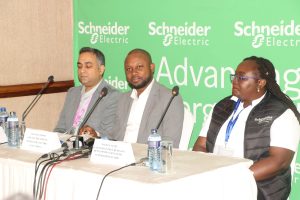
Nairobi, Kenya, April 21, 2026 — Global energy technology company Schneider Electric has reaffirmed its commitment to advancing an inclusive energy transition across Sub-Saharan Africa, as it participated in the ARE Energy Access Investment Forum 2026 (EAIF 2026). The engagement comes at a pivotal moment when millions across the region remain without reliable electricity, underscoring the urgency of scalable and sustainable solutions.
Held over four days, the forum brought together key stakeholders from the public and private sectors to explore pathways toward universal energy access. Schneider Electric used the platform to highlight its strategy for expanding access to affordable, reliable, and clean energy, particularly in underserved and off-grid communities.
According to the International Energy Agency, more than 666 million people worldwide still lack access to electricity, with Sub-Saharan Africa accounting for the largest share of this deficit. The agency warns that without accelerated efforts, the goal of universal access by 2030 may remain out of reach. Distributed renewable energy solutions—such as mini-grids and off-grid solar systems—are increasingly viewed as critical tools in bridging this gap.
In response, Schneider Electric is advocating for stronger collaboration among governments, development partners, and private sector players to drive what it describes as “energy democracy.” The approach emphasizes inclusive governance and a shift from centralized power systems toward decentralized, community-led energy models that can simultaneously address challenges of access, affordability, and reliability.
During the forum, the company showcased a range of decentralized energy solutions designed to deliver long-term social and economic impact. Central to this was its Climate Smart Village model, a community-focused framework that integrates clean energy technologies with local engagement, skills development, and entrepreneurship support.
“Access to energy must go hand in hand with strengthening human capacity and fostering local entrepreneurship,” said Ayush Gupta, Director of Global Strategy & Business for Anglophone Africa, Access to Energy at Schneider Electric. “Since 2009, we have combined clean electricity access with vocational training and support for local enterprises, ensuring communities gain not only reliable power but also sustainable economic opportunities.”
Schneider Electric also highlighted measurable progress achieved through its access-to-energy initiatives. The company reports having impacted over 61.7 million people globally with access to clean electricity, supported more than 11,000 entrepreneurs across 60 countries, and aims to reach 100 million beneficiaries by 2030.
Among the solutions presented was the Homaya Advanced Solar Solution, designed to provide reliable electricity to last-mile communities, including schools, healthcare facilities, and small businesses. The system is supported by digital monitoring through EcoStruxure™ Energy Access, enhancing reliability and enabling continuous service delivery in remote areas.
Another innovation featured at the forum was the Altivar Solar ATV320, a solar-powered water pumping system that adapts to available solar energy. The solution is expected to boost agricultural productivity, improve water access, and enhance food security in regions with limited or no grid connectivity.
The company also pointed to the success of its Climate Smart Village model in India as a blueprint for replication in Africa. In the Jharkhand villages of Sehal and Chatti, an 85 kW solar system has transformed local economies by powering irrigation, agricultural processing, and small businesses. The initiative has reportedly doubled household incomes over four years, reduced seasonal migration, and increased women’s participation in economic activities, while cutting carbon emissions.
“Access to clean and reliable electricity can transform communities by unlocking economic opportunity and strengthening resilience,” said Ifeanyi Odoh, Country President of Schneider Electric East Africa. “Solutions must be rooted in local realities and supported by strong partnerships. Through decentralized energy and community engagement, we can drive meaningful and lasting impact across Sub-Saharan Africa.”
As EAIF 2026 concludes, Schneider Electric’s message remains clear: achieving universal energy access will require not only technological innovation, but also inclusive, community-driven approaches that empower people and sustain long-term development.