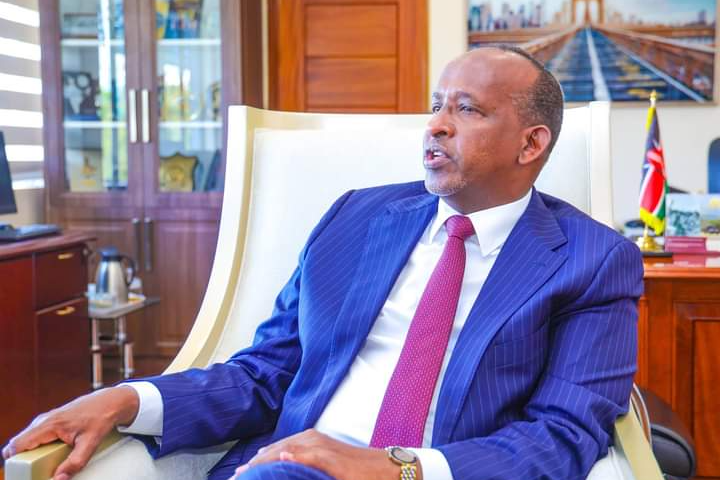
The government has defended its plan to establish 23 Ebola treatment and isolation centres across Kenya, saying the facilities form part of a national preparedness strategy meant to strengthen the country’s response to outbreaks of highly infectious diseases, including Ebola.
The Health CS Aden Duale said the programme includes a proposed facility at Laikipia Airbase, which officials say will be among a network of strategically distributed isolation units intended to improve rapid containment and treatment capacity during public health emergencies.
Duale said the centres are being rolled out to ensure that suspected or confirmed cases can be isolated and managed quickly, reducing the risk of spread and easing pressure on major referral hospitals.
“The proposed Ebola treatment and isolation unit at Laikipia Airbase is part of the 23 similar units to be established in the country as part of our preparedness and response,” he said.
He added that the initiative is also tied to Kenya’s broader ambition to position itself as a regional hub for specialised healthcare services.
“This proposed facility reaffirms Kenya’s position as a medical tourism hub in the East Africa region with the capacity to offer specialised care for complex diseases like Ebola,” he said.
International scrutiny and guidance
The plan has drawn attention from international partners, including the United States Embassy in Nairobi, which has underscored the importance of biosafety compliance, community engagement, and transparent risk communication in the establishment of high-containment medical facilities.
While supporting Kenya’s broader epidemic preparedness efforts, U.S. officials have cautioned that inadequate communication or limited consultation with local communities could heighten anxiety and fuel misinformation around the proposed centres.
Public backlash and protests
The announcement has sparked public anger in several areas earmarked for the facilities, with residents staging protests over what they describe as a lack of consultation and uncertainty about safety.
In Laikipia and other affected regions, demonstrators have marched with placards calling for the government to halt or relocate the planned units. Many residents said they were concerned about living near facilities associated with highly contagious diseases, arguing that the decision appeared to have been made without sufficient public participation.
Others cited fears of stigma and potential economic fallout, including reduced property values and reputational harm to their communities.
Political tension over rollout
The plan has also drawn political criticism.
Kiharu MP Ndindi Nyoro questioned whether counties would be willing to host the facilities without broader consultation, warning of possible resistance if local concerns are not addressed.
Duale rejected the criticism, arguing that national health preparedness cannot be delayed by political disagreements or local opposition.
“Ndindi Nyoro, I think you are very unfair,” he said. “If all counties refused to host isolation centres the way you are suggesting, where would Kenyans who would be infected, God-forbid, go?”
A test of preparedness and trust
The Ministry of Health maintains that the 23 centres are part of a decentralised emergency response system designed to improve outbreak detection, speed up containment, and reduce pressure on national referral hospitals during crises.
Officials say the facilities will be built under strict biosafety standards and integrated into Kenya’s wider surveillance network. .