From Caicedo to Doku, Premier League stars are becoming unlikely characters in Kenya’s dating culture, as men borrow football language to describe their romantic experiences, hide identities and joke about relationship complications.
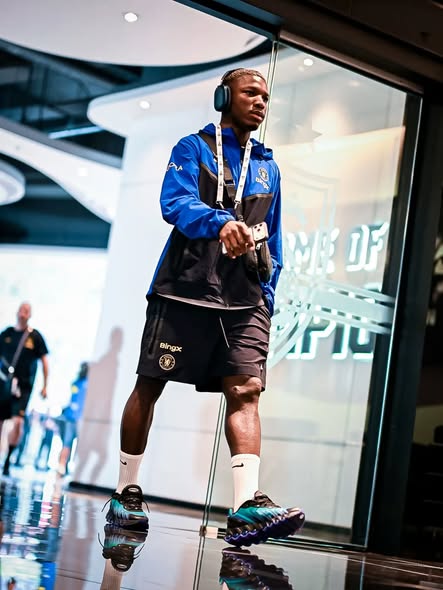
When a Kenyan man tells his friend that he has a Caicedo, he may not necessarily be talking about Chelsea’s midfield sensation.
And when another complains that his Olise has given him a lifetime injury, the conversation may have little to do with football.
Welcome to the latest twist in Kenya’s dating culture, where Premier League footballers are acquiring unexpected identities as coded names for girlfriends, side partners and women men are romantically involved with.
From Moisés Caicedo and Jérémy Doku to Michael Olise and N’Golo Kanté, football stars have found themselves drawn into conversations about relationships, romantic competition and heartbreak.
The unusual trend came into the spotlight on Monday, November 16, after Kenyan TikToker Ashanny, a Chelsea supporter, criticised men for using footballers’ names to refer to women they are dating.
Her complaint quickly became another source of entertainment for football enthusiasts, with Kenya Gossip Club sharing the discussion online.
Rather than ending the conversation, the criticism attracted hundreds of comments, with men defending the practice and introducing more footballers into the growing vocabulary.
One commenter, identified as 001_moran, offered his own interpretation of the rivalry between Caicedo and Olise.
“Bro to bro; Better Caicedo mwenye utaingia field bare footed na ucheze game 90 rather than Olise mwenye atakupea life time injury. Ukipata hiyo injury bro nobody will sign you,” he wrote.
Another brought former Chelsea midfielder N’Golo Kanté into the conversation, joking: “Ngolo Kante anaitisha Armband.”
A third simply declared: “We Adama Traore Nyamaza.”
There was also a reference to Brighton midfielder Carlos Baleba, with one commenter writing: “Sawa Baleba.”
Behind the jokes is a simple explanation: football offers men a language they already understand and can use to discuss their romantic lives without necessarily mentioning the women involved.
For men sharing the jokes, using a footballer’s name can provide a degree of anonymity, particularly when discussing relationships with friends on WhatsApp groups or social-media platforms.
Instead of mentioning a girlfriend, former partner or woman they are secretly seeing, a man can use a player’s name and allow his friends to interpret the reference.
It also gives the conversation an element of humour. Footballers have recognisable playing styles, reputations and histories that can be borrowed to make comparisons about relationships.
The language of football also provides a ready-made vocabulary. A woman can become a starter, a substitute, a transfer target or even a player competing for the captain’s armband.
In some conversations, the comparisons are also a way of discussing attraction, loyalty, romantic availability and the risks associated with dating without being too direct.
The references are not standardised, however. Their meanings depend on the people using them, their football knowledge and the particular conversation.
A dating vocabulary of its own
Kenya’s relationship culture has never lacked colourful descriptions.
Long before Caicedo and Doku entered the conversation, expressions such as manzi, msupa, mresh and bae were already part of everyday dating vocabulary.
Then came the slay queen, a description associated with women who enjoy fashion, beauty and an expensive lifestyle. Depending on the speaker, the term can be complimentary or dismissive.
The side chick and mpango wa kando became familiar descriptions of women involved with men who already have partners.
There is also the clande, derived from the word clandestine, referring to a secret romantic or sexual partner.
Financial relationships have generated their own language. A financially established man supporting a younger woman is commonly called a sponsor or blesser, while the woman receiving such support is sometimes referred to as a blessée.
The age difference between partners has also inspired expressions such as Ben Ten, used to describe a younger man involved with an older woman, and ancestor or fossil, sometimes used to describe older men dating younger women.
These expressions have travelled through music, radio, WhatsApp groups, comedy and social-media platforms, becoming part of the language used to discuss modern relationships.
A 2019 study by Chuka University’s Miriti Gervasio, titled Social Media Discourse of Chuka University Students on WhatsApp Platforms, examined how young people use slang to communicate and construct identities online. It documented expressions including slay queen, side chick, clande, Ben Ten, ancestor and fossil.
Another study by Kenyatta University’s Job Ngoge Amwoma, Use of Sex Euphemisms in Selected Radio Talk Shows in Kenya, examined how Kenyans use indirect expressions when discussing relationships and sexual matters.
The research identified side chick as one of the euphemisms used to describe a mistress, alongside variations such as mside chick and kaside chick.
When football becomes relationship language
The attraction of footballers’ names is perhaps unsurprising in a country where European football commands a huge following.
For many Kenyan men, conversations about Manchester United, Arsenal, Liverpool and Chelsea are a regular feature of social life.
Football provides an endless supply of language that can be adapted to relationships.
There are transfers, substitutes, injuries, competition for starting positions and the coveted captain’s armband.
In the latest online conversation, the reference to Kanté demanding the armband was particularly telling. In football, the armband represents leadership and authority. In the dating jokes, it became a reference to a woman seeking a more prominent position in a man’s romantic life.
The Caicedo and Olise comparison also borrowed from football rivalry to make a point about romantic experiences, with one commenter joking that a man would rather have a partner who could last the full 90 minutes than one who would leave him with a lifetime injury.
Amos Njau, a football pundit, explains that the jokes also provide an opportunity for football supporters to demonstrate their knowledge of the game while participating in a conversation that might otherwise be about private relationships.
For some, it is simply another way of extending football rivalry beyond the pitch and into their social lives.
More than just a joke?
Ashanny’s criticism has brought attention to a practice that might otherwise have remained confined to men’s WhatsApp groups and private conversations.
The debate touches on a familiar tension in dating culture: the difference between private jokes among friends and the language used to describe women who may not even know they have been given football identities.
For the men participating in the trend, it is largely football banter, an inventive way of discussing relationships without revealing too much.
For critics, however, turning women’s identities into coded references can be another way of reducing relationships to labels and stereotypes.
Either way, the conversation shows how quickly Kenyan social media can turn popular culture into a language of its own.
Footballers spend their careers trying to make headlines through goals, assists and trophies. In Kenya, some are now making headlines for an entirely different reason.
“They have become part of the country’s dating vocabulary,” Njau said.