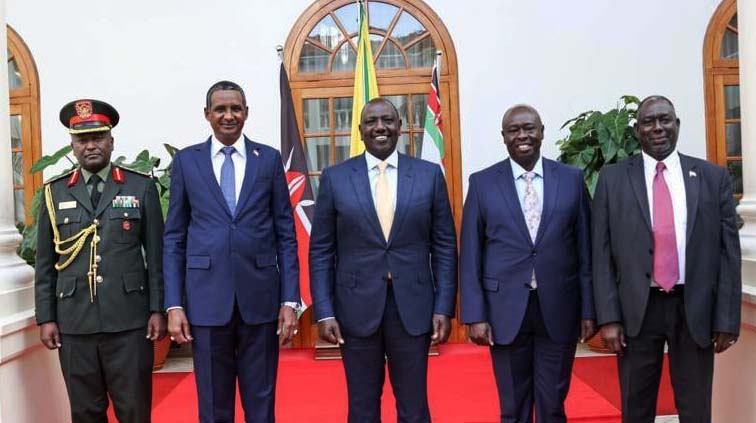
UDA Defends Government on Fuel Prices, Blames Opposition for ‘Political Games’
By Njeri Irungu,
Nairobi, April 16, 2026

The United Democratic Alliance (UDA) has come out strongly in defence of the government’s handling of rising fuel prices, accusing opposition leaders of politicising a global crisis for their own gain.
In a statement issued Thursday, UDA Secretary General Hassan Omar Hassan dismissed recent criticism from opposition figures as “deceitful and amusing,” arguing that the concerns raised were based on misinformation and a misrepresentation of facts.
“The press conference staged by members of the opposition was filled with outright lies and laughable claims designed to mislead Kenyans,” said Hassan. “Their attempt to exploit a global geopolitical challenge for political expediency speaks volumes about their lack of depth and selfish nature.”
The ruling party maintained that the government has taken deliberate measures to shield Kenyans from the impact of soaring global fuel prices. According to Hassan, KSh 6.2 billion has been released through the Petroleum Development Levy to stabilise pump prices, alongside a reduction in Value Added Tax on petroleum products from 16 per cent to 8 per cent.
“As a result of these interventions, Super Petrol, Diesel and Kerosene will now retail at KSh 197.60, KSh 196.63 and KSh 152.78 respectively,” he stated, adding that the measures were aimed at cushioning consumers from high import costs.
UDA attributed the current fuel price pressures to global market disruptions, particularly the ongoing conflict in the Middle East. “Kenya, like many nations, is experiencing ripple effects from international energy market volatility. Claims that this crisis is manufactured by domestic policy are false and malicious,” Hassan said.
Central to the government’s strategy, he noted, is the Government-to-Government (G-to-G) fuel import arrangement, which he credited with ensuring steady supply and easing pressure on the US dollar.
“The G-to-G framework has eliminated speculative pressure in the foreign exchange market by reducing spot purchases of dollars by oil marketers,” he explained. “It continues to protect the economy and guarantee supply stability.”
Hassan also criticised unnamed former government officials for what he termed as “selective amnesia,” claiming they had previously supported the same arrangement they now oppose.
“It is particularly ironic that individuals who participated in designing and approving the G-to-G framework are now feigning ignorance and attacking it for political reasons,” he said. “This is not only dishonest but a clear attempt to sabotage government efforts.”
On recent controversy surrounding fuel imports outside the G-to-G system, UDA insisted that such actions were illegal and posed serious risks.
“The importation in question violated the law, involved higher costs, and included substandard products. It was a criminal act on multiple fronts,” Hassan asserted. “Had it proceeded, Kenyans would be paying as much as KSh 236 for petrol and KSh 260 for diesel.”
The party further dismissed claims of an impending fuel shortage during the Easter period, terming them baseless.
“At no point has the country faced a supply disruption. We have maintained sufficient stock to meet national demand,” he said, adding that contingency measures had already been activated to address isolated logistical challenges.
UDA also took issue with opposition calls for mass action over the fuel price increases, describing them as misguided.
“Calling for protests over a crisis driven by global shocks is not only naïve but ignores the realities of an import-dependent economy,” Hassan said.
The party warned that proposals to scrap key government initiatives such as the National Infrastructure Fund and Affordable Housing Levy would undermine long-term development.
“These frameworks are critical for financing infrastructure, creating jobs and driving inclusive growth. Dismantling them without viable alternatives reflects a lack of commitment to national progress,” he said.
Despite the criticism, UDA expressed confidence in the leadership of Energy Cabinet Secretary Opiyo Wandayi and Investments, Trade and Industry Cabinet Secretary Lee Kinyanjui.
“We remain confident in their stewardship and urge them to stay steadfast in the face of misleading and sensational claims,” Hassan said.
He concluded by commending the government’s response to the crisis, saying, “We acknowledge the progressive steps being taken to navigate these challenges and cushion Kenyans from the adverse effects of global oil price shocks.”