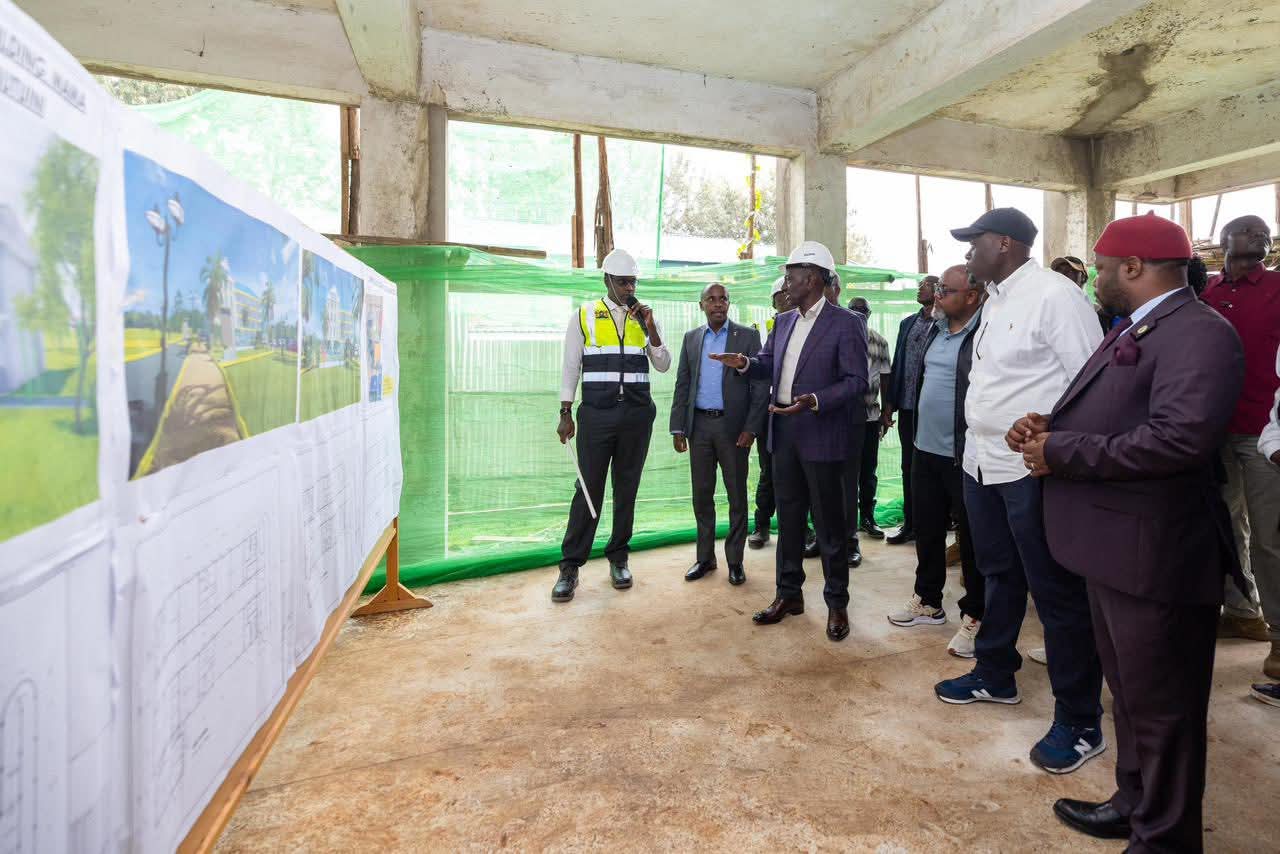
The nearing completion of the Dagoretti Sub-County Level IV Hospital in Mutuini is emerging not just as an infrastructure milestone, but as a strategic shift in how healthcare is delivered to Nairobi’s densely populated and historically underserved communities.
When William Ruto toured the 400-bed facility this week, his remarks went beyond praise for construction progress. The project, he indicated, is part of a broader push to decentralize specialized healthcare services and reduce the overreliance on overstretched national referral institutions.
Unlike previous hospital upgrades that focused primarily on physical expansion, the Mutuini facility is being positioned as a fully integrated care centre capable of handling surgical procedures, maternal emergencies, chronic disease management and advanced diagnostics at the sub-county level.
A Strategic Decongestion Plan
For years, thousands of patients from Dagoretti South and surrounding areas have flocked to Kenyatta National Hospital and Mama Lucy Kibaki Hospital for services that could ideally be handled locally. The result has been chronic overcrowding, long waiting hours and delayed treatment.
Health planners say the 400-bed capacity at Mutuini is deliberately designed to absorb a significant portion of these cases. By strengthening surgical theatres, maternity wards and laboratory services at the grassroots level, the government hopes to reverse the patient flow that has for decades strained referral facilities.
“This is not just about adding beds; it is about restoring efficiency in the healthcare system,” a senior health official familiar with the project said.
Focus on Maternal and Emergency Care
Dagoretti South has experienced rapid population growth, with informal settlements expanding steadily over the years. Health data has consistently shown high demand for maternal, newborn and emergency services in such areas.
The upgraded hospital will include modern maternity and neonatal units aimed at reducing preventable maternal and infant deaths. Emergency response services are also expected to improve, cutting the time lost when patients are transferred across long distances in critical condition.
Hospital Chief Executive Officer Dr. Martin Wafula Wekesa said the facility’s expansion will significantly reduce referral delays and improve survival outcomes.
“We are building a hospital that can respond to real community needs in real time,” he noted during the President’s visit.
Economic Ripple Effects
Beyond healthcare delivery, the hospital is expected to stimulate local economic activity. Large public facilities often attract pharmacies, diagnostic centres, small businesses and housing development in surrounding areas.
Construction has already created temporary employment opportunities, and once operational, the hospital will require additional medical personnel, support staff and suppliers.
Local leaders argue that the project may also help stabilize household finances. With services available closer to home, families will spend less on transport and private medical alternatives.
A Test Case for Universal Health Coverage
The Mutuini project is widely seen as a litmus test for the government’s universal health coverage agenda. Analysts say its success will depend not only on completion and equipping, but also on staffing, maintenance and consistent supply of medical commodities.
As the final equipping phase begins ahead of the anticipated handover next month, attention is shifting to operational readiness. Residents are hopeful, but cautiously so, aware that infrastructure alone does not guarantee service delivery.
Still, if implemented as envisioned, the Mutuini Level IV Hospital could redefine healthcare access in Nairobi’s informal settlements — turning what was once a peripheral facility into a central pillar of community-based medical care.