By Njeri Irungu,
Nairobi,
December 19,2025.
The Government of Kenya has reported significant progress in economic recovery, job creation and social reforms, positioning 2025 as a defining year in the country’s transition from economic stabilisation to sustained growth.
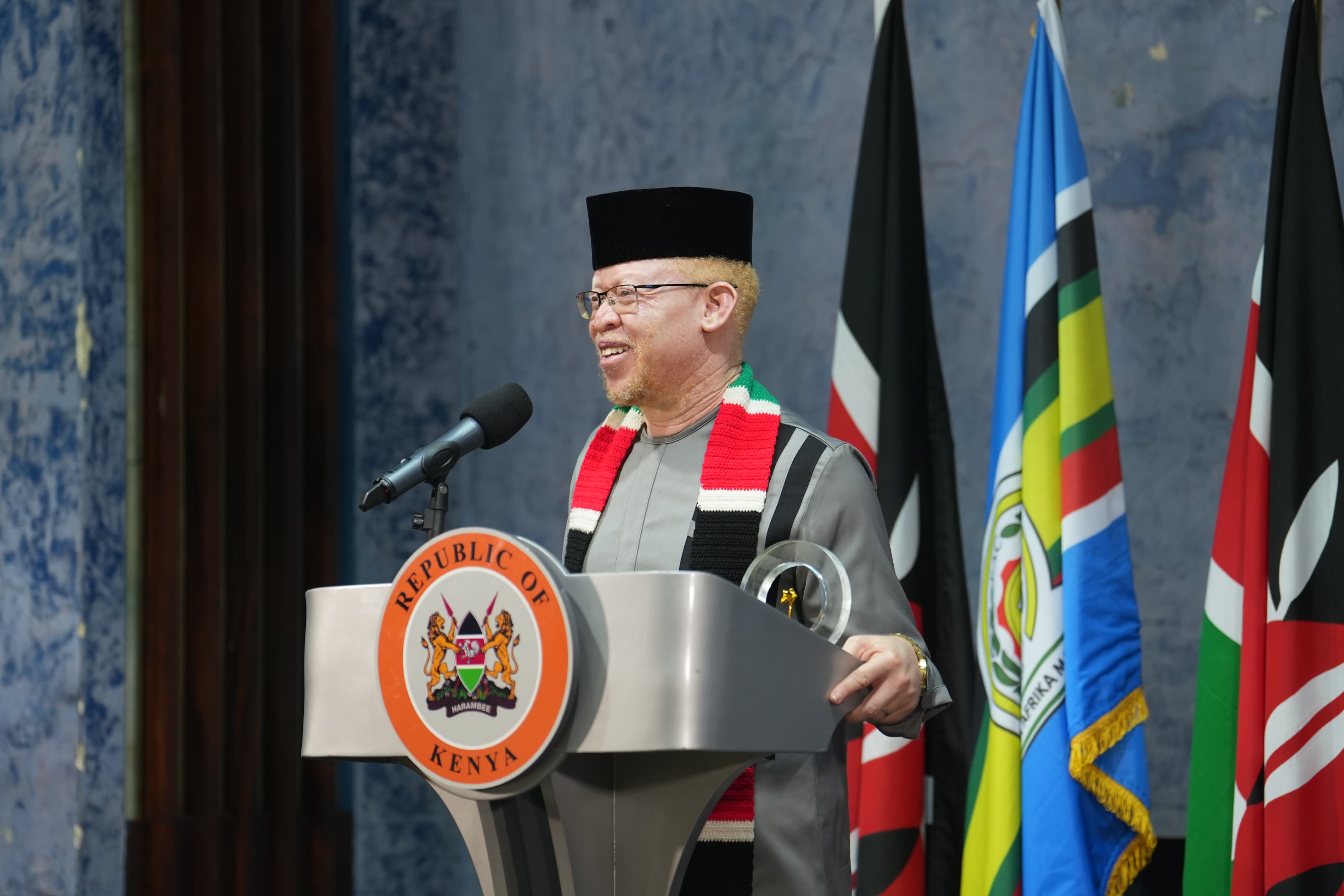
Speaking at Harambee House Annex on Friday, Government Spokesperson Hon. Sen. (Dr.) Isaac Mwaura said the country had created over two million jobs across multiple sectors, marking a shift from post-crisis recovery to long-term economic expansion under the Bottom-Up Economic Transformation Agenda (BETA).
Dr. Mwaura described BETA as the government’s primary vehicle for transitioning Kenya from an exclusionary “Third World” economic model to a “First World” economy anchored on productivity, economic freedom and broad citizen participation. He noted that the past year had been pivotal following a period of both global and domestic economic strain.
According to the government’s 2025 scorecard, inflation has declined sharply from 9.6 per cent to 4.6 per cent, easing pressure on household incomes. The Kenya shilling has also stabilised against the US dollar, supported by strong export performance and record diaspora remittances, which reached KSh 660 billion in the last financial year, now Kenya’s largest source of foreign exchange.
Agriculture reforms boost food security
The government highlighted agriculture as a major success area, citing a policy shift from consumption subsidies to production-led support. More than 7.1 million farmers are now digitally registered, a move that has reduced cartel influence in farm input distribution.
Over 21 million bags of subsidised fertiliser have been distributed, reducing prices from KSh 7,500 to about KSh 2,500 per bag and saving farmers an estimated KSh 105 billion. As a result, maize production has increased to 44 million bags, with projections of 70 million bags in 2025, helping reduce unga prices from KSh 250 to around KSh 130.
Tea earnings rose to KSh 215 billion, coffee exports grew by 73 per cent in early 2025, while acreage under edible oil crops nearly doubled, easing Kenya’s import bill. Expanded production in sugar, cotton, dairy and livestock has also boosted rural incomes, with the revival of cotton ginneries alone creating thousands of jobs across several counties.
MSMEs, housing and youth employment
On enterprise growth, the government reported that the Hustler Fund has disbursed over KSh 80 billion, enabling 26 million Kenyans to access formal credit scores and allowing more than 7 million people to clear negative credit records. Approximately 3 million MSMEs are now formally banked, while the Fund has mobilised KSh 5 billion in savings.
Affordable housing emerged as a major driver of employment, with 240,000 housing units under construction nationwide, supporting nearly half a million direct and indirect jobs. Employment in the sector is projected to peak at up to one million workers, with KSh 4.4 billion ring-fenced for Jua Kali artisans supplying construction materials.
Youth employment has also been boosted through market construction, student accommodation projects, and environmental initiatives such as the Nairobi River Regeneration Programme, which has engaged 44,000 young people.
Health, digital transformation and education
The government announced the successful transition from NHIF to the Social Health Authority (SHA), with over 27 million Kenyans registered, tripling previous health insurance coverage. Premiums for 2.3 million vulnerable citizens are fully covered by the state, while cancer cover has been increased to KSh 800,000 per patient.
Digital transformation continues to underpin service delivery, with over 24,000 kilometres of fibre optic cable laid and nearly 1,500 public Wi-Fi hotspots operational. More than 22,500 government services are now digitised on eCitizen, generating close to KSh 1 billion daily in revenue and reducing leakages.
In education, 76,000 teachers have been employed since 2022, with an additional 24,000 positions advertised, alongside expanded investment in TVETs and digital learning infrastructure.
Tourism, labour migration and infrastructure financing
Tourism earnings reached KSh 452 billion in 2024, supporting over three million jobs, with projections of KSh 1.2 trillion in 2025. Kenya has also signed six bilateral labour agreements, resulting in over 452,000 Kenyans securing jobs abroad, particularly in healthcare, hospitality and technical fields.
The government also announced Cabinet approval of the National Infrastructure Fund, designed to mobilise private capital and domestic savings to finance a KSh 5 trillion development pipeline, shifting away from debt-led infrastructure financing.
Dr. Mwaura said resources from the Fund would be directed to high-impact projects in irrigation, transport, energy, and digital infrastructure to support industrialisation and food security.
“This year has laid a strong foundation for inclusive growth,” he said, reaffirming the government’s commitment to accountability, disciplined implementation and citizen-centred development.