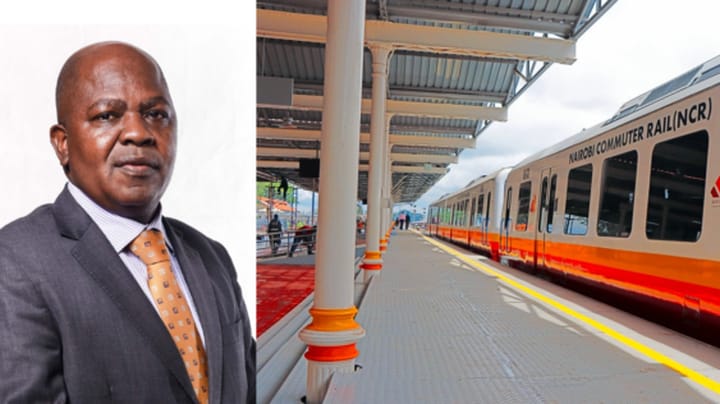
Kenya Railways Corporation is facing mounting scrutiny following a wave of allegations touching on procurement irregularities, land fraud, judicial defiance and investor intimidation—raising fresh questions about governance under Managing Director Philip Mainga.
A review of court filings, audit reports and parliamentary proceedings points to deep-rooted accountability challenges within the corporation, even as it oversees multi-billion-shilling infrastructure projects and vast tracts of public land. At the centre of the controversy is the disputed Sh29.5 billion Nairobi Railway City Central Station tender, part of a flagship urban redevelopment programme backed in part by the United Kingdom.
The contract was awarded to China Road and Bridge Corporation despite a lower bid of Sh22.9 billion from China Civil Engineering Construction Corporation.
In January 2026, the Public Procurement Administrative Review Board nullified the award, ruling that CRBC’s bid was non-compliant after submitting both technical and financial proposals in a single envelope—contrary to procurement rules. The board ordered a fresh evaluation.
However, Kenya Railways proceeded to re-award the tender to the same firm, triggering a second appeal and raising concerns over disregard for oversight decisions.
The dispute escalated further after representatives of CCECC were reportedly detained and deported shortly after challenging the award. Court filings indicate the officials were picked up in Nairobi and Kisumu and placed on outbound flights, prompting legal action and claims of harassment—an episode analysts say could dent investor confidence.
Additional concerns have emerged from the private sector. A legal notice linked to the Qatar Chamber of Commerce alleges unfulfilled commitments in railway-linked real estate projects, further raising questions about the corporation’s credibility among foreign investors.
Separately, the Directorate of Criminal Investigations is probing a Sh88.2 million tender allegedly awarded to a company linked to the managing director’s fiancée. Investigators have flagged suspected irregularities, including backdated documents, restricted bidding and attempts to bypass procurement thresholds.
The case has drawn attention from lawmakers and civil society groups, with growing calls for a forensic audit and possible prosecutions if wrongdoing is established.
Kenya Railways is also under pressure over alleged illegal land allocations. An audit identified more than 500 parcels of railway land—some in prime areas of Nairobi, Mombasa and Nakuru—reportedly transferred to private individuals without proper authorisation.
In Embakasi’s Dupoto and Dafur settlement schemes, fraudulent compensation claims linked to public land are said to have cost taxpayers billions of shillings. Efforts by the Ethics and Anti-Corruption Commission and the DCI to investigate some of the cases have reportedly stalled, further fuelling accountability concerns.
Beyond governance issues, the corporation is grappling with mounting financial strain tied to the Standard Gauge Railway (SGR), Kenya’s largest infrastructure project. Data from the Office of the Auditor-General shows the corporation posted a Sh28.17 billion loss for the year ending June 2025 and is operating with negative equity of Sh121 billion.
Loan arrears linked to SGR financing have reportedly surpassed Sh413 billion, with additional penalties and interest accumulating due to missed repayments.
The corporation has also been accused of defying court orders. In one case, construction on a commuter rail project allegedly continued despite a High Court directive halting the works pending determination of a constitutional petition—raising concerns about adherence to the rule of law.
Uncertainty also surrounds leadership at the parastatal. Mainga’s term officially expired in January 2026, yet no public recruitment process has been announced, and the board has remained silent on succession plans.
Lawmakers and governance experts are now calling for urgent intervention. Busia Senator Okiya Omtatah has described the corporation as “technically insolvent,” warning that continued mismanagement could pose risks to public finances.
Key demands emerging from stakeholders include prosecution of officials implicated in procurement and land scandals, restructuring of the corporation’s leadership, and reforms to restore investor confidence through transparent processes.
With a project pipeline estimated at over Sh2.8 trillion, Kenya Railways remains central to the country’s infrastructure ambitions. However, the unfolding controversy underscores the risks posed by weak governance in managing large-scale public investments.
As scrutiny intensifies, attention now shifts to oversight agencies—and whether the allegations will translate into concrete action or fade into Kenya’s broader struggle with accountability in state corporations.