By Njeri Irungu,
March 19, 2026,
Nairobi, Kenya.
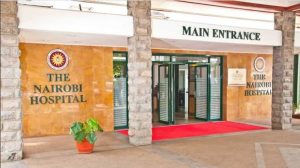
The Nairobi Hospital has moved to reassure the public of its stability and continued service delivery, dismissing recent claims of financial distress and institutional collapse.
Speaking during a press briefing on Thursday, Chief Executive Officer Felix Osano said the hospital remains fully operational, with all departments functioning normally and patient care proceeding without disruption. He emphasised that clinical teams are on duty and that the institution continues to deliver what he described as world-class healthcare.
Osano outlined the hospital’s financial performance, noting that revenues stood at approximately KES 12.8 billion in 2024 and KES 11.8 billion in 2025. The slight decline, he explained, was largely due to a temporary insurance suspension in the third quarter of 2025. However, recent figures indicate a recovery, with monthly revenues rebounding to about KES 1.03 billion in early 2026 after dipping in the latter half of last year.
The CEO added that early 2026 performance shows an 8 per cent growth compared to a similar period last year, alongside a KES 33 million surplus, signalling a turnaround from previous deficits. Admissions have also risen by about five per cent, while oncology services have recorded significant growth, increasing by over 100 per cent.
On liquidity, Osano reported steady improvement, with the hospital reducing its supplier backlog by KES 230 million to KES 1.72 billion. Staff salaries and payments to doctors, he said, are fully up to date. In 2025 alone, the hospital paid KES 6.3 billion to suppliers and KES 1.7 billion to consultant doctors.
At the same time, the hospital is owed approximately KES 2.4 billion, including funds from the Social Health Authority and the now-defunct National Hospital Insurance Fund. Management, he noted, is actively working to recover these receivables and normalise cash flow in the coming months.
The hospital also maintains a strong investment portfolio valued at about KES 1.349 billion as of February 2026. This includes bank deposits and government securities, with bonds generating notable capital gains, reflecting what management described as prudent financial stewardship.
Board Chairman Barcley Onyambu addressed governance concerns that have recently drawn public attention, stating that the situation has been misrepresented as a systemic failure rather than an internal governance matter. He maintained that the institution remains stable and capable of fulfilling its mandate.
Onyambu criticised the recent arrest of several board members, terming the action unprecedented and inconsistent with due process, particularly as some had already secured court protections. He expressed solidarity with the affected individuals while affirming the board’s commitment to resolving the matter through legal channels.
He further pointed to longstanding governance challenges within the hospital, some dating back over a decade, including weakened internal controls and conflicts of interest. According to the chairman, these issues are now being addressed through more structured and transparent processes.
The board also pushed back against what it described as misleading narratives from a small group of individuals, including claims of missing billions and undisclosed loans. Onyambu clarified that there is no KES 4.2 billion loan and that widely circulated figures of KES 9.1 billion allegedly missing are inaccurate. Instead, audited accounts show a KES 2.214 billion deficit in 2024, largely attributed to legacy projects and one-off adjustments.
He added that repeated legal challenges by a minority group have disrupted governance processes, including annual general meetings and critical operational decisions. In some cases, court actions delayed essential investments such as the replacement of medical equipment, though some of these restrictions have since been lifted.
Despite these challenges, the hospital continues to play a key role in Kenya’s healthcare system. It is currently supporting patient overflow from Kenyatta National Hospital and Jaramogi Oginga Odinga Teaching and Referral Hospital, among other public facilities. It also provides services to beneficiaries of the Teachers Service Commission and is preparing to extend services to the National Police Service from April.
Looking ahead, management said it is investing in modern systems, including the rollout of an integrated enterprise resource planning (ERP) platform to improve efficiency and strengthen oversight. The hospital is also advancing its quality standards, with multiple ISO certifications already in place and plans underway to secure accreditation from Joint Commission International.
Both the board and management reiterated their commitment to transparency, governance reform, and high-quality patient care. They maintained that while governance disputes have played out publicly, the hospital’s core operations remain strong.
“The Nairobi Hospital is operational, financially active, and focused on its mandate,” Onyambu said, adding that efforts are ongoing to safeguard the institution’s integrity and ensure it continues to serve all stakeholders.