By Njeri Irungu,
28 January 2026,
Nairobi, Kenya.
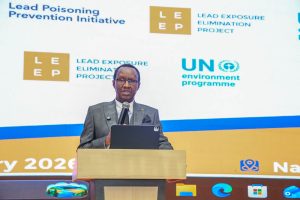
African governments have taken a major step toward tackling toxic lead exposure after officials from 25 countries met in Nairobi for a regional summit aimed at strengthening controls on lead-based paints.
The two-day meeting brings together policymakers, standards regulators, health officials and industry stakeholders to accelerate the adoption and enforcement of lead paint regulations, a long-standing public health concern across much of the continent.
Hosted in Nairobi, the workshop is jointly organized by the Lead Exposure Elimination Project (LEEP) and the Kenya Bureau of Standards (KEBS), with support from the United Nations Environment Programme (UNEP). Organizers say the gathering is designed to translate awareness of lead poisoning into concrete regulatory action.
Lead exposure remains one of the most widespread yet preventable environmental health risks, particularly for children. Globally, an estimated one in three children is affected by lead poisoning, which has been linked to developmental delays, learning difficulties and long-term health complications. In adults, lead exposure contributes to millions of cardiovascular-related deaths each year, with the heaviest burden borne by low- and middle-income countries.
Speaking during the opening session, KEBS Director of Market Surveillance Peter Kaigwara said Kenya’s decision to host the meeting reflects the country’s commitment to protecting consumers and promoting safer industrial practices.
“Eliminating lead in paints is not just a regulatory issue; it is a public health and economic priority,” Kaigwara said, adding that strong standards are essential for sustainable industrial growth, environmental protection and consumer safety across the region.
The workshop was officially opened on behalf of the Ministry of Investment, Trade and Industry by Ms. Purity Kamau, Director of Chemicals and Minerals Industries, representing Principal Secretary Dr. Juma Mukhwana. She called for greater alignment of regulatory frameworks among African states, noting that fragmented standards often hinder enforcement and cross-border trade.
“Harmonized approaches will strengthen compliance, improve information sharing and support intra-African trade under the African Continental Free Trade Area,” Kamau said.
Participants include senior officials from ministries responsible for environment, health and trade, as well as representatives from national standards bureaus. Regional institutions such as the East African Community (EAC) and the African Organisation for Standardisation (ARSO) are also represented, alongside the World Health Organization, civil society groups and members of the paint manufacturing sector.
UNEP is contributing technical expertise through its Chemicals and Health Branch, drawing on its role in leading the Global Alliance to Eliminate Lead Paint.
Over the course of the meeting, delegates are expected to exchange country experiences, build technical capacity on enforcement mechanisms, and develop national action plans tailored to their regulatory contexts. Organizers say the discussions are also intended to lay the groundwork for sustained regional cooperation beyond the workshop.
“This is about moving from policy intent to real protection on the ground,” said LEEP Executive Director Dr. Clare Donaldson. “By convening governments in one space, we are strengthening accountability and accelerating progress toward eliminating lead exposure that continues to harm millions of children.”
The Nairobi workshop will be followed by a similar regional meeting for Francophone African countries, scheduled to take place in Lomé, Togo, on February 11–12, 2026. Together, the two forums aim to ensure continent-wide momentum toward the elimination of lead paint.