The woman stood near the metal gate of Mwananyamala Hospital, her hands trembling as she clutched a crumpled piece of paper with two names: her brother’s and her nephew’s.
For three days, she said, she had been turned away by security officers guarding the morgue. She whispered one sentence, as if afraid the wind might carry it to the wrong ears: “They don’t want us to know how many they killed.”
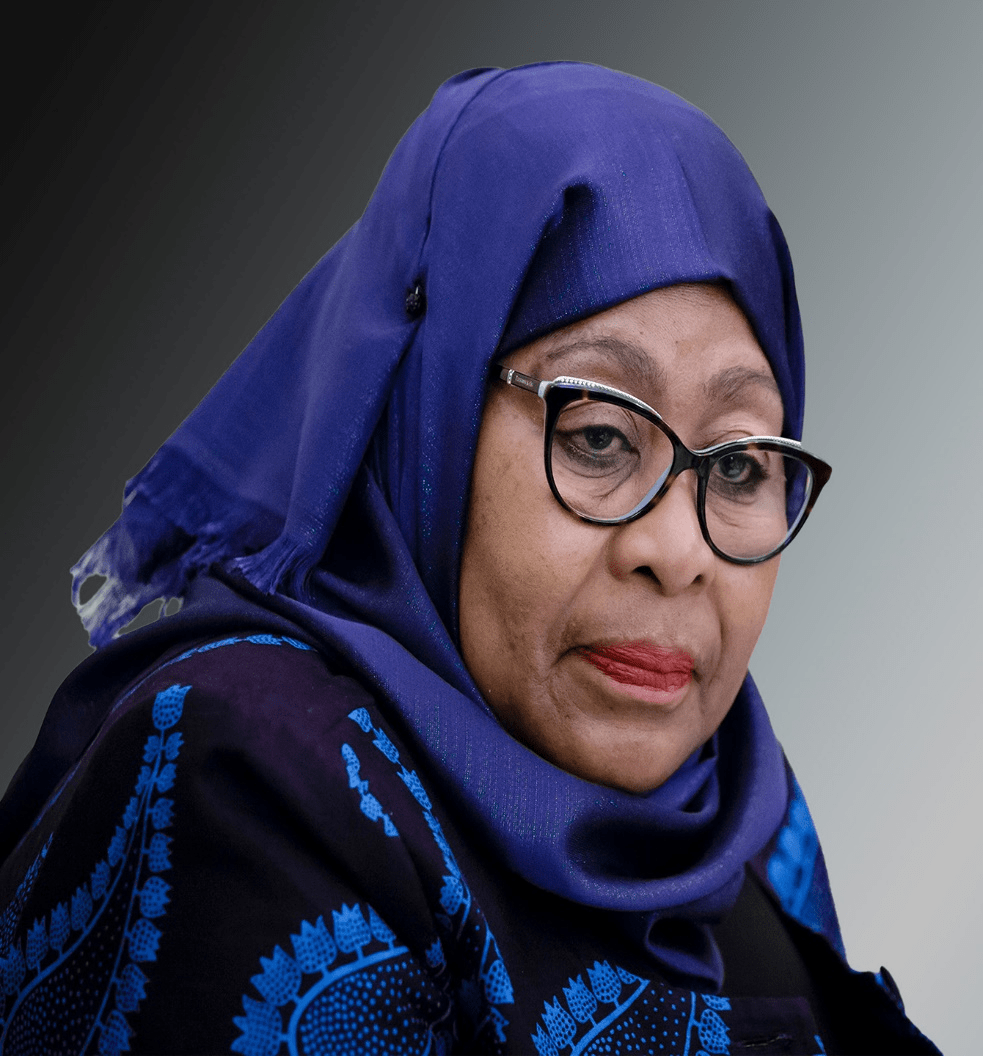
Across Dar es Salaam, these quiet searches have become a grim ritual since the October 29 election, when President Samia Suluhu Hassan secured a landslide victory after her two main challengers were barred from the race. As protests erupted, security forces moved swiftly — and brutally. What followed, rights groups say, was one of the deadliest political crackdowns Tanzania has seen in decades.
Families now drift from hospital to hospital, morgue to morgue, carrying the names of loved ones they may never find.
“They shot him like he was nothing”
On the outskirts of the city, in the working-class neighborhood of Kigogo, the father of a 22-year-old university student sat on a plastic chair outside his home, staring at the ground. He said he saw his son fall. The young man, he insisted, was not protesting.
“He stepped outside to see what was happening,” the father said. “The police were chasing people, firing everywhere. I shouted his name. Then he dropped. They shot him like he was nothing.”
When he tried to retrieve the body, he said, officers prevented him. “They told me to go to the morgue. But when I went there, the morgue was full. They wouldn’t even let me in.”
Such accounts echo reports from human-rights organizations and journalists documenting hospitals overwhelmed with bodies, with some relatives being asked for bribes just to identify the dead.
A mother searches — and keeps searching.
Albert Kasembeli a governace expert and former security reporter explained that the police were confiscating the phones of the nurses and doctors and deleting videos and photos to hide bodies of the dead.
“The police were threatening them not to record anything. This person, in particular, had two phones, so he gave the police the one that had no recordings, which satisfied them,” he said, adding, “The people who sent this video are terrified for their lives, which is why it took them so long to get it out.”
At Amana Hospital, a mother of three, described her attempt to locate her teenage daughter, who vanished during the second day of protests. She had visited four hospitals, sleeping outside one of them after security guards denied her entry.
“I heard people saying bodies were being taken at night,” she said. “If they buried her somewhere, I just want to know. I just want to see her.”
She paused, her voice cracking. “Even if it is only her clothes.”
For many families, even that small mercy is out of reach.
A crackdown shrouded in silence
Opposition party Chadema claims hundreds — possibly more — were killed in the first three days of unrest. Civil society groups say the number may reach into the thousands, accusing security forces of dumping bodies in mass graves. Morgue access remains tightly controlled, and the government’s internet shutdown in the early days of the protests kept disturbing images from spreading.
When the blackout lifted, some Tanzanians tried to share what they had seen: bodies lying in the streets, blood on sidewalks, police trucks piled with the dead. Within hours, messages circulated warning that anyone posting “provocative images” risked arrest — even treason charges.
One young man who filmed a police officer beating a protester said he deleted the video moments later. “I was shaking. I thought they would come for me,” he said. “People are scared. You can feel it everywhere.”
The bodies no one talks about
Several doctors, speaking on condition of anonymity, said they had been instructed not to speak to journalists or provide casualty numbers. At one hospital, a nurse said officials warned staff that identifying bodies without authorization could lead to disciplinary action — or arrest.
“We were not allowed to write names,” she said. “Some bodies were badly damaged. You could see signs of beatings, not just bullets.”
She added: “I will never forget those faces.”
Arrests sweep across the opposition
As the death toll remains disputed, the legal crackdown has widened. More than 200 people have been charged with treason — a crime that carries the death penalty. Among those detained are senior Chadema officials, while others remain on the run. Families say even young men who simply stood outside during the protests have been detained without explanation.
“They just grabbed everyone,” said a woman whose husband was arrested while buying groceries. “Now they say he is a criminal.”
A commission and a country in shock
President Hassan has since announced a commission of inquiry to investigate the killings, promising “reconciliation, not revenge.” She has called for leniency toward young people caught up in the protests and pledged constitutional reforms.
But many Tanzanians doubt the commission will uncover the truth, pointing to past inquiries that faded quietly.
In Dar es Salaam, a former civil servant described the announcement as “a performance for the world.”
He leaned forward and whispered: “If you want to see the truth, follow the mothers. Follow those who are still looking.”
The hidden grief of a nation
In Temeke, near the railway lines, a group of young men gathered in the courtyard of a small mosque after evening prayers. One of them, a 19-year-old, said he buried his closest friend two days after the protests — quietly, without ceremony, out of fear that authorities would attend the funeral.
“He was hit with a baton until he stopped moving,” the young man said. “We carried him ourselves. At night.”
He looked away. “We could not even cry loudly.”
Nearby, an elderly man listening to the conversation added softly: “We survived this time. Next time, who knows?”
The images no one can unsee
The few videos that escaped deletion show bodies sprawled on pavements, men being dragged by police, women wailing over the dead. For many Tanzanians, these images confirm what they already knew — that the repression was widespread, indiscriminate, and devastating.
But countless other images, families say, were erased before anyone else could witness them.
A question Tanzania is not ready to answer
As the government insists it will investigate, as rights groups demand independent access, and as families continue their desperate searches, one question hangs over the country: How many died?
In a small home in Buguruni, a woman lit a candle beside a photo of her missing brother. She says she will keep searching, no matter the risk.
“Maybe they buried him,” she said. “Maybe he is in a place we do not know. But I cannot stop. If I stop, it means they have won.”
Outside her window, the city moved on — motorcycles rumbling, radios blaring, children running in the narrow alleyway.
But inside, the silence carried a weight that felt almost unbearable.
According to the UN, Tanzanians took to the streets on 29 October against the re-election of President Samia Suluhu Hassan, in a protest that quickly escalated into violence and death.
The UN said harrowing reports have emerged of “families desperately searching everywhere for their loved ones, visiting one police station after another and one hospital after another,” the UN human rights chief Volker Türk said.
Further reports suggest that security forces transported the bodies of some of those killed to undisclosed locations, said OHCHR.
Mr. Türk called for investigations into the killings and other human rights violations.
“I strongly urge the Tanzanian authorities to provide information about the fate and whereabouts of all those missing, and to hand over the bodies of those killed to their loved ones so that they can be given dignified burials,” said Mr. Türk.
“There are also disturbing reports that security forces have been seen removing bodies from streets and hospitals and taking them to undisclosed locations in an apparent attempt to conceal evidence.”
Due to the volatile security situation and the internet shutdown following the election, the UN has not been able to verify exact casualty figures.
Human Rights groups say that police arbitrarily arrested, detained, and carried out extrajudicial killings and enforced disappearances of party leaders and supporters during rallies and other people near the North Mara gold mine.
“On June 23, Edgar Edson Mwakabela was abducted by plainclothes men. Mkwabela told the media that he was detained overnight at a police station in Dar es Salaam, before being taken to Arusha, where he was beaten and interrogated about his role in mobilizing a boycott by traders,” Human Rights Watch said, adding, “His abductors abandoned him in Katavi National Park, about 1,200 kilometers from Dar es Salaam, four days later.”