
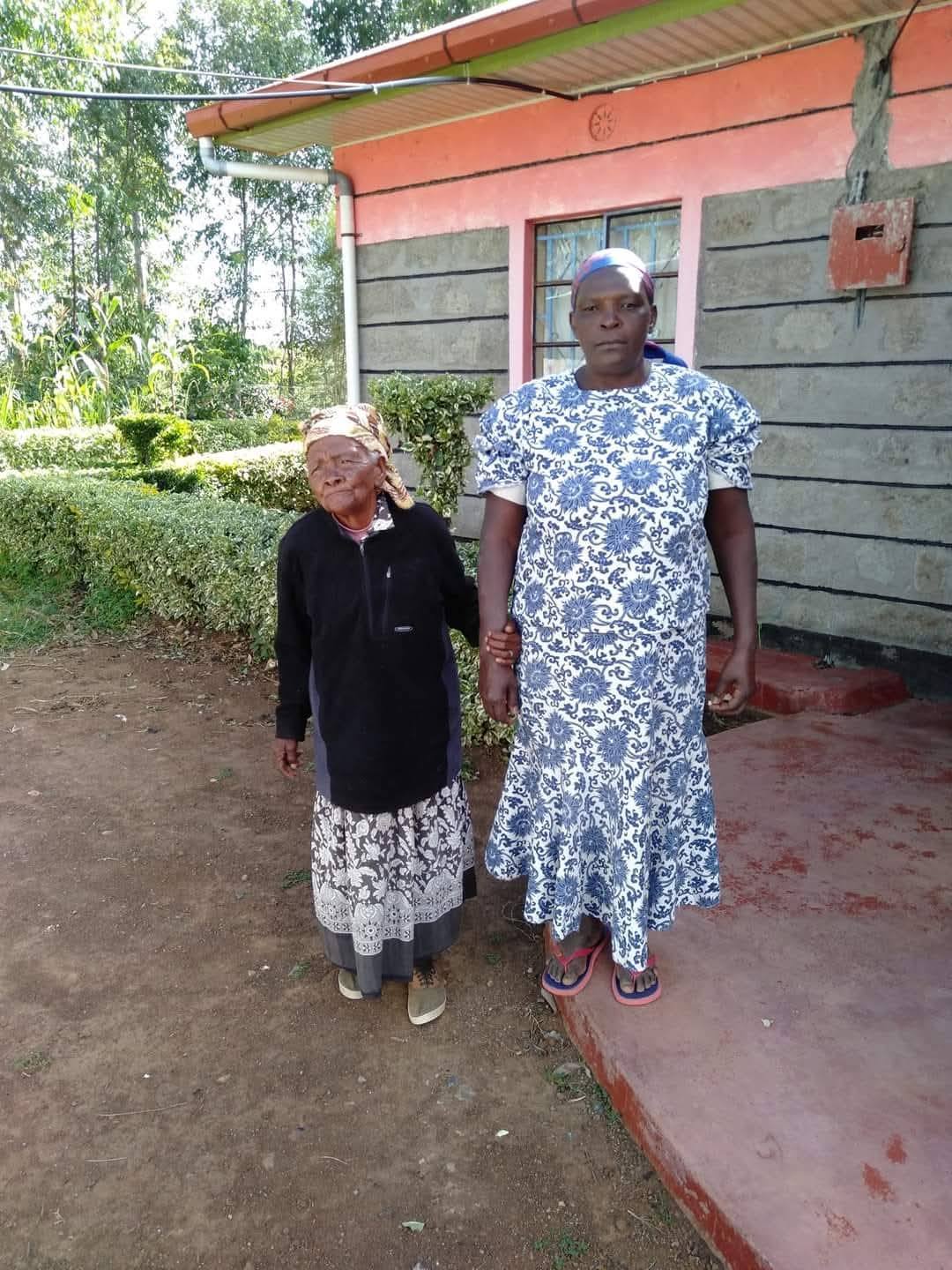
For 39 years, Sarah Wangui was a question mark her family learned to live with. Not dead, not present — just gone.
In Tetu, Nyeri County, her name survived in fragments: stories told to children who never met her, memories carried by siblings who grew old waiting for answers, and a silence that gradually replaced the urgency of searching.
Then, in 2013, she was found in a hospital bed in Nakuru.
The moment did not feel like closure. It felt like time folding in on itself.
Wangui was born in the 1920s in Tetu and married in the 1940s to Elijah Kiruri, a much older man who already had other wives. She became his third wife and later moved in 1970 to Muhotetu in Laikipia County, where she lived a rural life, farming and raising five children.
Then came 1974.
She left home one day, as she often did, and never returned.
At first, the family did what families do in such situations — they waited, they asked, they searched. Someone said she had been seen in Narok. Another rumour placed her in Nyahururu. Each lead carried enough hope to restart the search, and each ended in disappointment.
As years passed, the search thinned out. Eventually, it stopped altogether.
Her husband lived on into extreme old age, dying in the mid-1990s at about 110 years, still without answers. By then, nearly two decades had already passed since Wangui disappeared. Her absence had become part of the family’s structure — not spoken of every day, but never fully absent either.
Then, in May 2013, something unexpected happened.
An elderly man named Ngugi arrived at the chief’s office in Ihururu, Tetu. He was in his 80s. He asked a question that immediately reopened a wound that had long been left to scar over: had Sarah Wangui ever been found?
Ngugi said he had worked in Muhotetu in the 1970s. He claimed he had known Wangui, and that they had left together after her disappearance and later settled in Gatundu, Kiambu County.
But his account carried another shock. He said that in early 2013, while they were in Nakuru, Wangui went missing again.
He searched for her for weeks. Hospitals. Police stations. Mortuaries. Nothing.
Eventually, he gave up searching in the cities and travelled back to Nyeri, to the place where her story began.
That decision brought him directly to her family.
What followed was immediate and instinctive. Relatives travelled to Nakuru. They moved from hospital to hospital, asking for records, checking wards, retracing footsteps through corridors filled with uncertainty.
After days of searching, they found her at Nakuru Provincial General Hospital.
She was alive.
Old, frail, and unwell — but alive.
The reunion, when it came, was not loud. There were no words that could properly hold what 39 years of absence feels like in a single moment. It was recognition mixed with disbelief, as if the mind had to work harder than the eyes to accept what it was seeing.
One relative later described it simply: it felt like looking at someone they had already buried in their hearts.
She was brought back to Nyeri.
But home had changed in ways that could not be reversed. The children she left behind had grown into adults, then elders themselves. Grandchildren she never knew existed were now grown. The house she left had filled with new generations.
Her return did not restore what was lost. It rearranged what remained.
Wangui lived quietly with her family until she died in 2022 at the age of her late 90s.
Even now, the family’s telling of her story carries a kind of unsettled weight. Some gaps remain unexplained, stretches of time that cannot be accounted for in detail, and memories that depend more on reconstruction than certainty.