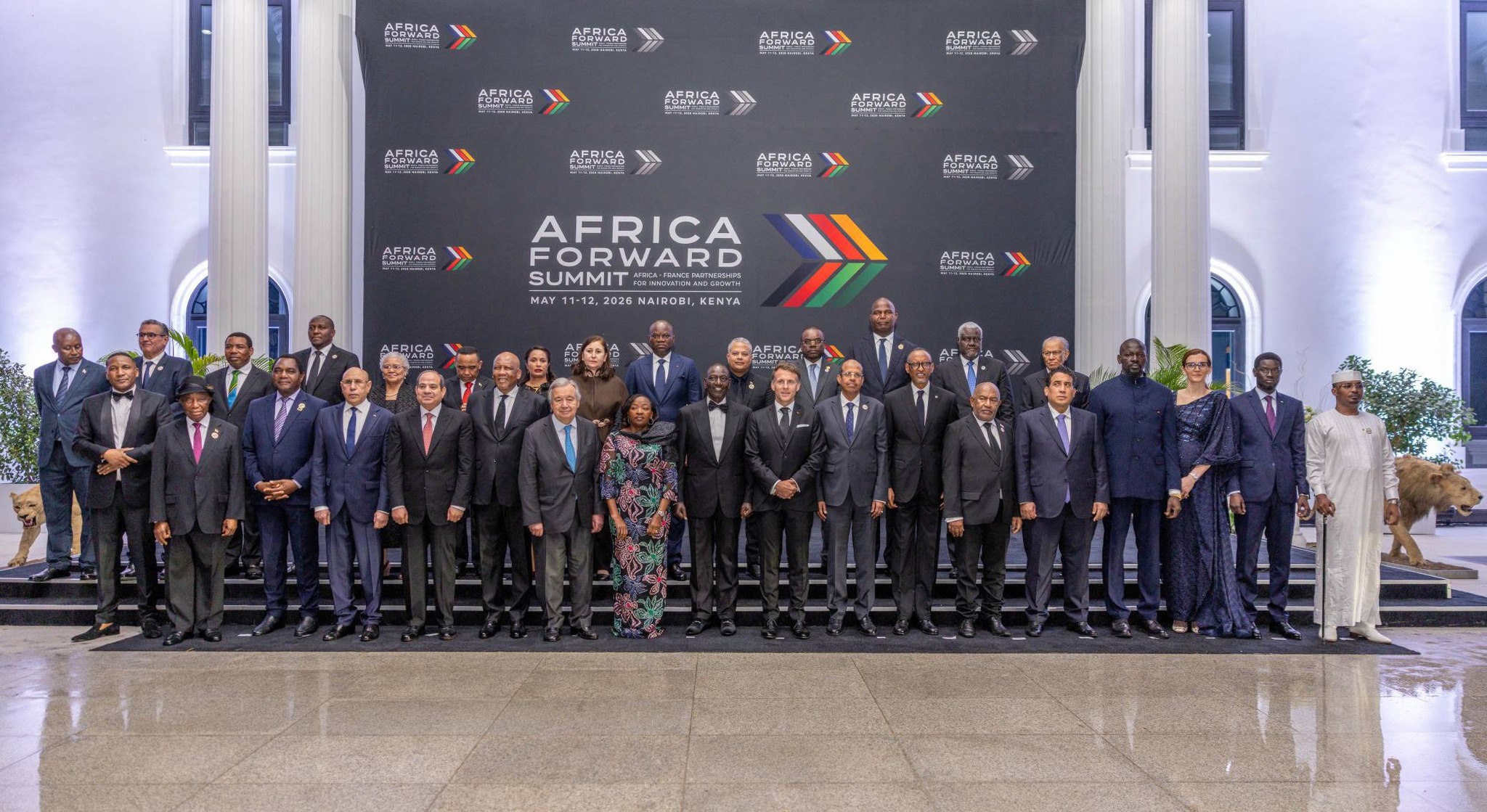
As presidents, investors and diplomats gathered in Nairobi for the Africa Forward Summit, Kenyans online and on the streets voiced sharply divided opinions over what the high-profile meeting truly means for the country and the continent.
While the government projected the summit as a platform for investment, trade and Africa-led partnerships, critics questioned whether the gathering marked a return of foreign influence disguised as economic cooperation.
President William Ruto said the summit is not only to celebrate the enduring bonds between Africa and France, but also to usher in a bold new era of partnership anchored in shared prosperity, mutual respect, and opportunity for our citizens.
“On behalf of the Government and the people of Kenya, I extend a warm welcome and deepest appreciation for your presence, engagement, and commitment to advancing a stronger and more prosperous future for Africa and its global partners,” Ruto said.
Hosted jointly by Kenya and France, the summit attracted more than 30 African heads of state, business leaders and global financiers. President William Ruto described the forum as an opportunity to reposition Africa as an equal partner in global development.
French President Emmanuel Macron announced investment commitments worth billions of shillings targeting infrastructure, energy, agriculture and technology projects across Africa.
But even as speeches inside conference halls focused on economic growth and partnership, many Kenyans outside the summit remained unconvinced.
On social media platforms, especially X and Reddit, users questioned whether the summit represented genuine cooperation or an expansion of foreign interests in Africa.
Some criticised Kenya’s growing ties with France, with others drawing comparisons to the anti-French sentiments recently witnessed in parts of West Africa.
“The fear is that Africa keeps changing masters instead of building independent economies,” one Kenyan user posted in an online discussion that attracted hundreds of reactions.
Others argued that Kenya risks entering into opaque agreements that could burden taxpayers through debt or long-term concessions to foreign companies.
The scepticism spilt into the streets of Nairobi, where activists attempted to stage demonstrations near the Kenyatta International Convention Centre, the venue hosting the summit.
Police blocked sections of the city centre as protesters accused France and Western nations of perpetuating economic domination in Africa under the guise of investment partnerships.
Some protesters carried placards reading “Africa is not for sale” and “Stop economic colonialism.”
Human rights groups later criticised the arrests of several activists during the demonstrations, arguing that peaceful dissent should have been allowed.
Another moment that generated widespread debate among Kenyans was an incident involving President Macron during one of the summit sessions.
Videos circulated online showing the French leader reprimanding delegates after noise interrupted proceedings. While some Kenyans defended his remarks as necessary to restore order, others described the moment as uncomfortable and patronising.
Political analysts say the reactions reflect a growing public awareness among Kenyans regarding international agreements and foreign-funded projects.
“The days when governments could sign major deals without public scrutiny are fading,” said political analyst Mark Bichachi. “Kenyans now question who benefits, what the conditions are and whether ordinary citizens gain anything.”
Still, supporters of the summit insisted the meeting offered Kenya a rare opportunity to position itself as a continental diplomatic and investment hub.
Business groups welcomed discussions around technology, renewable energy, artificial intelligence and financing reforms, saying such partnerships could unlock jobs and economic growth.
Officials also defended the summit, arguing that Africa requires external investment to bridge infrastructure and development gaps.
Yet for many Kenyans, the summit highlighted deeper anxieties over sovereignty, debt, unemployment and whether ordinary citizens ever benefit from grand international conferences held in their name.