On the blackened remains of burnt stalls and the uneven ground left by overnight demolitions, Gikomba’s traders now pick through memory as much as rubble.
This is East Africa’s largest informal trading hub — a place where livelihoods are built on cloth, metal, timber, second-hand shoes and early morning bargains. But today, it is also a construction site in waiting, redrawn in government blueprints that promise a radically different future.
The transformation of Gikomba Market has become one of Nairobi’s most ambitious redevelopment projects, framed as a rebirth of a space that feeds thousands of families across Kenya.
But for the traders who have spent years — sometimes decades — inside its narrow corridors, the future is no longer just a policy idea. It is personal, uncertain, and immediate.
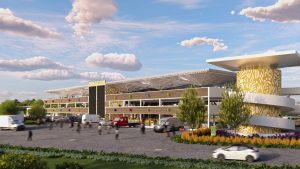
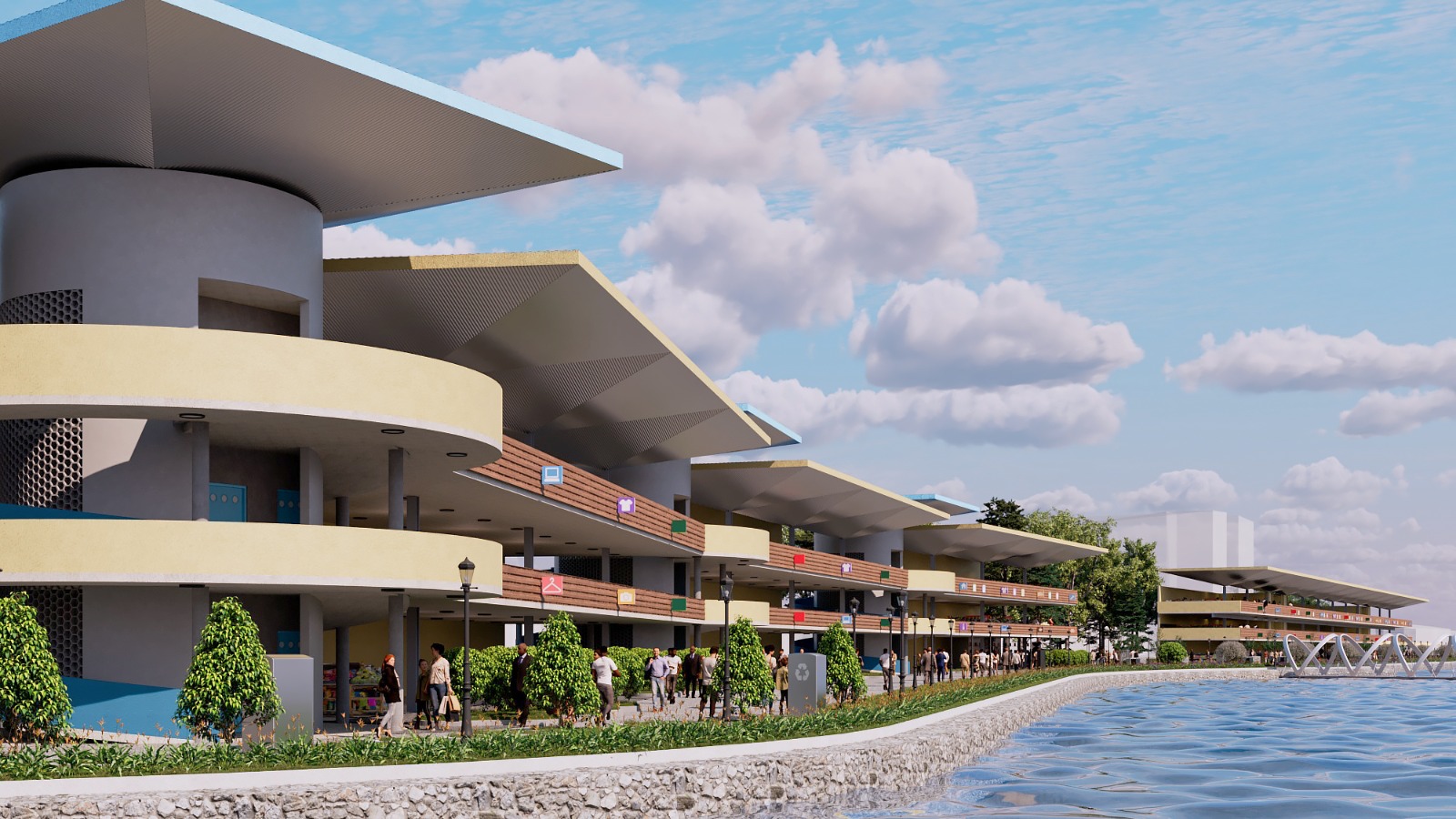
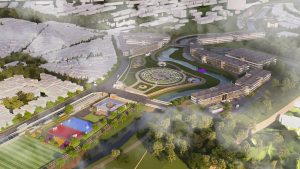
Artistic impressions of the proposed KSh3–5 billion project show a tightly ordered complex replacing the chaos they know.
At its centre is a circular park with concentric rings, designed like a controlled heartbeat of the new market. A river curves through the development, shaping walkways, buildings and public spaces into a planned urban system rather than the current dense sprawl.
Around it, multi-storey buildings rise in clean lines, replacing the maze of temporary stalls. In the foreground, a soccer pitch and multi-purpose court appear where traders now remember open-air vending, rain-soaked mornings and smoke from past fires.
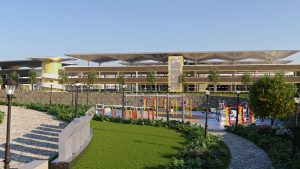
Tree-lined walkways, modern lighting, bus stops and structured loading bays complete the vision — a place where movement is regulated and trade is formalised.
For traders like Ann Wanjiru, who sells second-hand clothes, the promise of order is tempting — but fragile.
“If they really build proper stalls with security, it will help us,” she said. “Every year we lose everything to fire. You watch your stock disappear in hours. It is painful.”
But even in her hope, there is hesitation.
“We want change,” she added. “We just don’t want to be left out.”
That fear runs deep through the market.
Near the remains of what used to be his stall, Jame Ochieng — known to fellow traders as Ochi wa nguo — speaks with the exhaustion of someone who has survived too many promises.
“We have been told many things before,” he said quietly. “After fire, they say rebuild. After rebuilding, nothing changes for us.”
A younger trader, Kamau Maina, selling shoes, worries about what the structure will mean in practice.
“The drawings look nice,” he said. “But will we afford the new stalls? Or will this become a place for other people?”
The demolitions that swept through sections of the market in March 2026 turned those questions urgent. Traders describe waking up to bulldozers, scrambling to rescue goods, and carrying what they could before structures came down.
Officials say the demolitions were necessary — a painful but required step to make way for redevelopment, improve safety, and reduce the constant threat of fire and flooding that has long defined Gikomba.
But for many traders, the cost was immediate and devastating.
“This is not just business,” said one trader, standing beside salvaged goods wrapped in plastic sheets. “This is rent, school fees, everything. When you lose stock, you lose your life.”
Former Deputy President Rigathi Gachagua condemned the demolitions, calling them “inhuman and beastly treatment,” and accusing authorities of displacing traders under the guise of modernization.
The government, however, insists the project is about survival as much as order — arguing that without redesign, Gikomba will remain vulnerable to disasters that wipe out livelihoods in a single night.
President William Ruto has defended the broader vision, describing Gikomba as a national economic artery.
“Gikomba does not serve the city of Nairobi alone — people as far as Busia, Embu, going as far as Mandera, they buy their wares from here,” he said.
The plan includes firebreak corridors, drainage systems beneath paved walkways, CCTV surveillance, structured zoning, and designated loading bays — all aimed at replacing the unpredictability of informal trade with controlled systems.
Even so, trust is fragile.
A hardware seller said traders are not against change — only exclusion.
“We want order,” he said. “But we don’t want to be pushed out in the process. We have built this place with our lives.”

For consumers, the idea of a cleaner, safer Gikomba carries its own appeal.
“I go there every month,” said Nairobi resident Amina Mohammed. “It is crowded, stressful. But it is where you find everything. If it is safer, that helps all of us.”
Another shopper added a caution many traders echo in reverse: “As long as prices don’t go up.”
Behind the debate is a deeper question of belonging — who the new Gikomba is being built for, and who it might leave behind.
Economist James Maina says Nairobi has little choice but to modernise its major trading hubs if it wants to compete globally, arguing that structure and infrastructure are now essential to urban growth.
But on the ground, in the dust and debris, those arguments feel distant.
For traders sweeping ash where stalls once stood, the future is not an architectural rendering. It is whether they will still have a place to sell, to earn, and to survive.
“This is all we have,” one trader said, looking at the empty space. “If they rebuild it, let them rebuild it with us inside it.”