By Njeri Irungu
24 March 2026 | Nairobi, Kenya
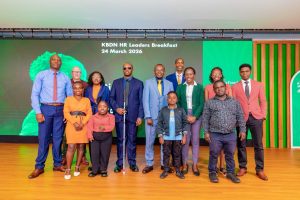
Safaricom has reaffirmed its commitment to disability inclusion, positioning it as a core business priority during the KBDN HR Leaders Breakfast held on March 24, 2026.
The telecommunications firm used the forum to underscore the role of diversity, equity and inclusion (DEI) in driving innovation and business performance, while reflecting on its internal progress toward building a more inclusive workforce.
This comes against the backdrop of the Persons with Disabilities Act, 2025 (No. 4 of 2025), Kenya’s primary legislation governing the rights and inclusion of persons with disabilities. The law adopts a rights-based approach aligned with the Constitution and introduces a mandatory requirement for both public and private sector employers to ensure that at least five percent of their workforce comprises persons with disabilities.
The Act broadly defines disability to include physical, sensory, mental, intellectual and developmental impairments — including conditions such as albinism — that may hinder full participation in society. It also provides incentives such as tax deductions for organisations investing in accessible infrastructure, as well as exemptions on the importation of assistive materials.
Safaricom revealed that employees living with disabilities currently account for four percent of its workforce, placing the company just one percentage point shy of meeting the legal threshold.
The company’s journey toward inclusion has been gradual. It hired its first employee with a disability in 2001, later formalising its diversity and inclusion framework in 2016. This was followed by participation in the Global Disability Summit in 2018 and the signing of the Disability Charter in 2020.
By 2026, the number of employees with disabilities had risen to 228, marking steady growth from 99 employees (1.7 percent) and 133 employees (2.4 percent) in earlier years.
Speaking at the event, Safaricom Group Chief People Officer Florence Nyokabi said disability inclusion remains a pressing priority in Kenya, noting the gap between current workforce representation and the five percent target.
“Disability inclusion is a pressing priority in Kenya. If you look at the five percent ambition and where many organisations are today, the gap still exists,” she said.
Nyokabi emphasised that inclusive workplaces require deliberate effort and are critical to business success.
“Inclusive workplaces do not just happen — and they do not just do good, they are good for business. They help us attract from a broader and often untapped talent pool, which ultimately strengthens organisational performance,” she added.
She also called on organisations to collaborate through networks such as the Kenya Business and Disability Network (KBDN).
“My call to action is simple: if your organisation is not yet part of KBDN, join this growing community. When people move from intent to action together, great things happen,” she said.
Eric Ngondi, KBDN Vice Chair, speaking at the forum, echoed the need for organisations to take immediate steps toward inclusion, regardless of their starting point.
“It does not matter where you are — start where you are. Take that one step and begin the journey. Inclusion is not only the right thing to do, it is also the smart thing to do,” he said.
Ngondi noted that while persons with disabilities make up an estimated 16 percent of the population, a significant majority remain excluded from meaningful economic opportunities.
“Leaders are the gatekeepers — they determine whether persons with disabilities are included or left out. Spaces like KBDN provide a safe platform to learn, collaborate and take practical steps toward inclusion,” he added.
Safaricom emphasised that diversity extends beyond visible attributes such as gender, age and disability, encompassing differences in thought, background and experience. While diversity may occur naturally, the company noted that inclusion requires intentional leadership to create environments where all employees feel valued and empowered.
Citing global research, the telco said organisations with diverse teams tend to be more innovative and financially successful, with some reporting up to 19 percent higher revenue and significantly lower staff turnover.
The HR forum brought together industry leaders to explore practical strategies for building inclusive workplaces, with a particular focus on ensuring that persons with disabilities are not only represented but meaningfully engaged.
As Kenya strengthens its legal framework on disability rights, companies like Safaricom are increasingly under pressure to align with the law — while also recognising inclusion as a competitive advantage rather than a compliance obligation.