By Njeri Irungu,
24th February 2026,
Nairobi, Kenya.
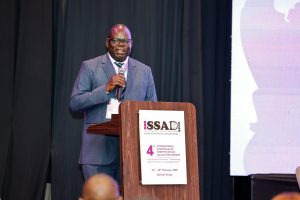
Global health leaders have gathered in Nairobi for the 2026 International Symposium on Streptococcus agalactiae Disease (ISSAD), marking the first time the premier global conference on Group B Streptococcus (GBS) is being hosted in East Africa.
The three-day symposium, running from February 23–25, has brought together world-renowned scientists, public health officials, policymakers and vaccine developers to accelerate progress toward preventing GBS — a leading cause of neonatal sepsis, meningitis, postpartum infections and infant mortality worldwide.
GBS remains a significant global health threat, with an estimated 18 to 20 million pregnant women — about one in five globally — carrying the bacteria each year. The infection is responsible for approximately 400,000 cases of invasive disease annually in infants and is linked to an estimated 91,000 infant deaths and 46,200 stillbirths worldwide. The burden falls disproportionately on low- and middle-income countries, where access to routine screening, preventive antibiotics during childbirth and advanced neonatal care remains uneven.
Chaired by Dr Hellen Barsosio, a Clinical Research Scientist at the Kenya Medical Research Institute and the Liverpool School of Tropical Medicine (KEMRI-LSTM Collaboration), ISSAD 2026 is shining a spotlight on African-led research and implementation science.
Dr Barsosio, who also co-leads the Maternal Immunisation Readiness Network in Africa & Asia (MIRNA), said hosting the symposium in Nairobi presents a transformative opportunity to amplify the voices of communities most affected by GBS.
“Hosting ISSAD 2026 in Nairobi presents a transformative opportunity to center the voices and experiences of the communities most affected by GBS disease,” she said. “There will be several researchers from low- and middle-income countries speaking at the conference, which is critical because this is where the GBS burden is heaviest.”
Despite decades of research, no licensed vaccine currently exists to prevent GBS. The primary prevention strategy — administering antibiotics during labour — has limited reach in many resource-constrained settings. Researchers are now exploring maternal immunisation approaches that could protect both mothers and their newborns.
Day one of the conference featured a robust scientific agenda addressing key knowledge gaps and implementation challenges. An opening panel examined vaccine candidates currently in clinical trials, while a plenary session on disease burden and surveillance presented updated global and regional estimates, highlighting persistent data gaps in sub-Saharan Africa and South Asia.
Parallel sessions are exploring infant disease burden, adult GBS infections in low- and middle-income countries and emerging genomics research reshaping understanding of transmission patterns. Experts are also examining surveillance challenges, including GBS-associated stillbirths and prematurity, drawing on data from global monitoring initiatives.
Nairobi’s selection as host city reflects Kenya’s growing reputation as a regional health innovation hub, supported by strong institutional partnerships and national commitment to advancing maternal and newborn health. The conference has received backing from KEMRI and the Kenya Ministry of Health.
Previous ISSAD conferences have been held biennially in regions including South America, Europe and Southern Africa, helping catalyse advances in GBS research and policy. The 2026 edition aims to accelerate the transition from evidence generation to policy implementation, particularly in high-burden settings.
With representation from more than 40 countries, ISSAD 2026 brings together a multidisciplinary community united in the goal of ending preventable GBS disease. The symposium continues through February 25, with additional sessions focusing on vaccine implementation readiness, diagnostic innovation and antimicrobial resistance.