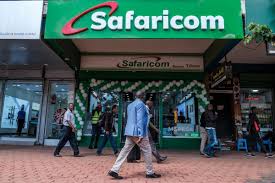
Public participation on the proposed divestiture of the government’s stake in Safaricom Plc is continuing across the country, with many Kenyans saying they are ready to support the sale — but only if it does not weaken local ownership of what they view as a strategic national asset.
The proposal involves the sale of 15 per cent of Safaricom shares to Vodafone at Sh34 per share, while the government currently holds 35 per cent of the company, a stake valued at between Sh280 billion and Sh300 billion.
Residents acknowledge the need for alternative funding options that avoid higher taxes and additional borrowing, but warn that the transaction must not compromise Safaricom’s Kenyan identity or long-term public value.
Public forums held in counties including Kitui, Nairobi and Nakuru reveal strong support for the sale as a development tool, alongside deep concern about potential job losses, higher consumer costs, and undue foreign influence.
Participants told the National Assembly’s Joint Committees on Finance and National Planning, and Privatisation and Public Debt, that Parliament must pass a law to ring-fence the proceeds and protect the company from decisions that could disadvantage ordinary Kenyans.
Many described the divestiture as a strategic response to rising national debt and limited fiscal space, noting that the transaction could raise around Sh200 billion to fund stalled infrastructure and social projects.
Speaking during the consultations, Moro MP Kimani Kuria said the government opted to sell to Vodafone, a long-standing partner, rather than an unfamiliar buyer, adding that the move would help reduce debt and promote development.
“The government is only selling 15 percent, and the buyer is purchasing at Sh34 per share, compared to the current market rate of Sh28,” he said.
Residents stressed that development must not come at the cost of losing control of a company that touches nearly every Kenyan household. Jerusha Muthoni, from New Mukuru Estate, said she supports the sale because it could deliver development.
“I fully support the move 100 percent because the money will be for development,” she said.
Samson Kumenda, from Njiru Sub-County, said the government had always intended to sell the shares but insisted that transparency was non-negotiable.
“I support the move, but there needs to be transparency in the dealing. Before the government bought Safaricom shares, they had envisioned that they would sell them one day,” he said.
From Bahati, Eddie Odongo said the sale was better than increasing taxes. “This is a good move. The money will be used for development purposes,” he said.
John Maina, also from Bahati, said the proceeds should accelerate infrastructure development
. “I support the proposed sale of the government’s stake in Safaricom since it will help accelerate infrastructure development. Once the money is obtained, it should be used wisely,” he said.
Others urged the government to ensure communities see direct benefits.
Elizabeth Kosgei, from Rongai, said, “Don’t forget us! Pesa ikitoka, construct roads for us as we pregnant women have been suffering and we will appreciate it.” she said.
From Kitui, Gideon Muthoka said the sale would reduce reliance on foreign loans. “The government is just selling what they own — you sell what is yours, and this is what they are doing,” he said. Nicholas Musili added, “Instead of borrowing and overtaxing Kenyans, let the government sell the shares.”
Public consultations are expected to continue in more counties, with residents saying their support will depend on clear safeguards, transparency, and visible development outcomes.