By Njeri Irungu,
December 3-2025,
Nairobi, Kenya.
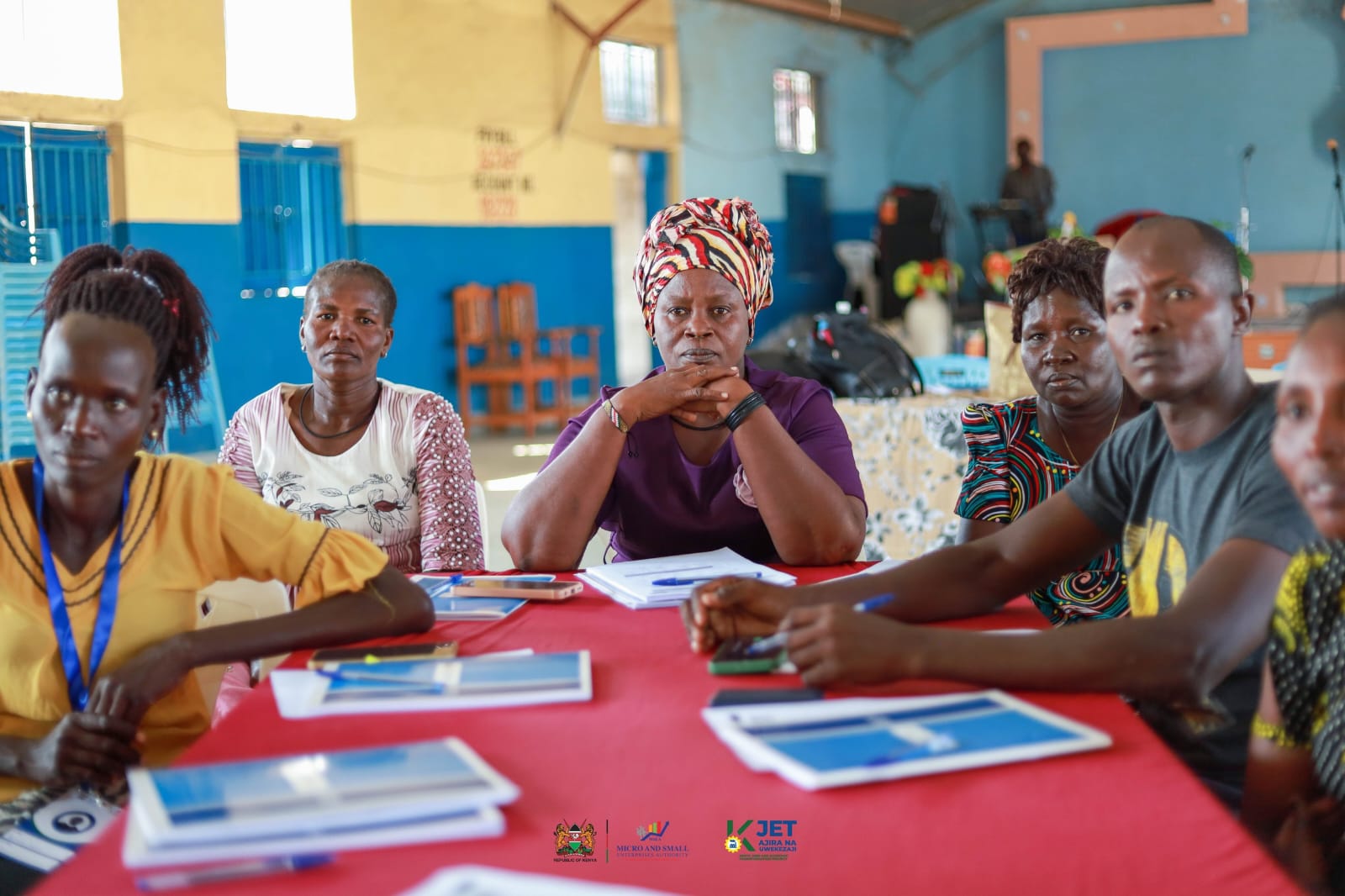
Kenya’s drive to strengthen the country’s small enterprise ecosystem gained fresh momentum today as the Micro and Small Enterprises Authority (MSEA) rolled out the first cohort of Business Development Services training under the Kenya Jobs and Economic Transformation (KJET) Project. The exercise, which began concurrently in ten counties, will unfold across all 47 counties over the next five weeks, reaching 94 clusters selected for this inaugural phase.
The training forms a central pillar of Component 2 of the KJET project, which is dedicated to raising productivity, building resilience, and driving growth among Micro, Small and Medium Enterprise clusters operating within ten priority value chains under the Bottom-Up Economic Transformation Agenda. These value chains — ranging from edible oils and construction materials to textiles, rice, tea, coffee, dairy, leather, the blue economy, and minerals — sit at the heart of Kenya’s economic transformation strategy. Through structured training and targeted co-investment support, the project aims to open new markets, strengthen enterprise performance, and help MSMEs create and expand job opportunities in a sustainable way.
Participants in this first cohort are engaging with a rich 12-module curriculum designed to deliver practical, hands-on business skills. The sessions are deliberately interactive, featuring real-world case studies, group work, and scenario-based exercises meant to help MSMEs confront the operational and market challenges they face daily. The broader goal is to prepare small enterprises not only to survive in competitive markets, but to scale and seize emerging opportunities across the country’s expanding value chain ecosystem.
Speaking during the launch of the training in Isiolo County, MSEA Director-General Henry Rithaa underscored the significance of the programme, describing it as a turning point in Kenya’s approach to supporting MSMEs. He noted that, for the first time, enterprise clusters across all counties are receiving structured, market-guided skills specifically tailored to close the gaps limiting their growth. He emphasised that the initiative is designed to enhance productivity, unlock new markets, and position Kenyan enterprises to compete both regionally and globally. According to Rithaa, the KJET programme represents more than a training effort — it is an investment in the long-term competitiveness and resilience of Kenyan MSMEs under the BETA agenda.
Once the classroom sessions conclude, each participating cluster will transition into a three-month mentorship phase. During this period, they will receive personalised, in-person guidance to help them apply the lessons learned, improve their operations, and strengthen their overall business performance. This follow-through phase is expected to play a critical role in translating the training into tangible economic gains for the enterprises involved.
MSEA has also opened applications for the second cohort of BDS training, with the application window running until December 31, 2025. The Authority is encouraging cooperatives, associations, and other cluster-based MSMEs to apply early through the KJET portal to benefit from the support available under this component of the project.
The rollout of this programme marks a significant step forward in Kenya’s ambition to transform its MSME landscape. With tens of thousands of livelihoods tied to small enterprises across the country, the KJET project represents a deliberate long-term investment in strengthening the foundations of enterprise development and job creation — and ensuring that Kenya’s small businesses are equipped to compete, innovate, and grow for years to come.